In Catalonia, this imprint is especially strong at the churches of Vall de Boí, declared a World Heritage Site, with their 11th- and 12th-century Romanesque frescoes and bell towers, or the 9th-century Monastery of Sant Cugat. Such structures bear witness to Christianity’s deep roots in the region in that period. Since Carolingian times, when the Spanish March was established as a Christian bulwark against Islam, Christianity has permeated Catalan life, as evidenced by preserved liturgical texts. Later, in the 13th century, the Cistercian order, with foundations such as Poblet Abbey, consolidated that influence, blending spirituality with cultural development.
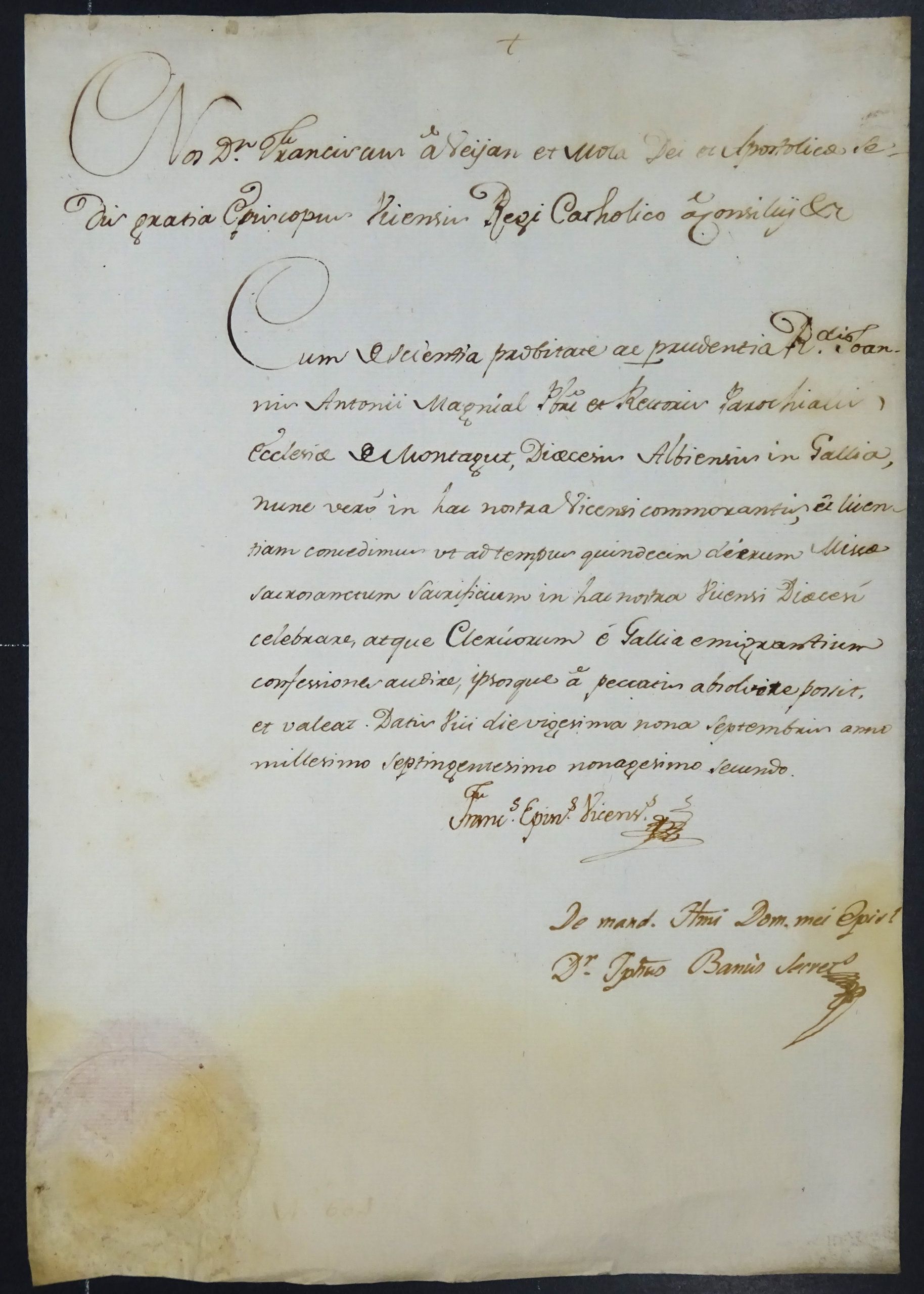
This influence remained strong in subsequent periods. In 1792, the Bishop of Vic granted a licence to Antoni Magnial, presbyter of Montagut (diocese of Albi), to celebrate Mass and hear the confessions of French clergymen exiled as a result of the French Revolution, an example of transnational Christian solidarity in times of crisis.
This influence remained strong in subsequent periods. In 1792, the Bishop of Vic granted a licence to Antoni Magnial, presbyter of Montagut (diocese of Albi), to celebrate Mass and hear the confessions of French clergymen exiled as a result of the French Revolution, an example of transnational Christian solidarity in times of crisis.