Tourism and the rediscovery of the Catalan landscape
Photo album “Bellezas de Gerona” (Girona’s Beauties)
1877
The photographs in this photographic album, the work of Joan Martí i Centelles, show a monumental city that decades later would become a major tourist attraction. Presented at the Universal Exhibition in Paris in 1878, it won a medal for its artistic and historical value. It is a key work in the history of Catalan photography, capturing in this case the 19th century heritage of Girona in the same way that the same author had done a few years earlier with the Catalan capital and his album “Bellezas de Barcelona”. (Barcelona’s Beauties)
Girona Municipal Archive
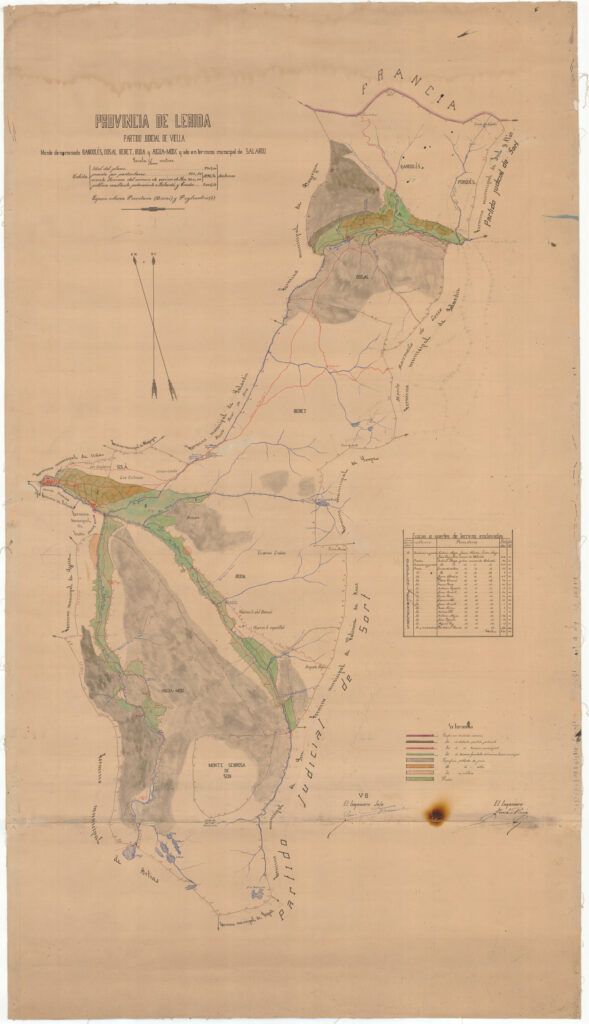
Map of the mountains called Bandolèrs-Dossau-Beret-Ruda-Aiguamoix, in the area of Salardú (Naut Aran)
1895
This map, dated 1895, represents the Bandolèrs, Dossau, Beret, Ruda and Aiguamoix mountains, located in the municipality of Salardú, in the region of Naut Aran, in the Pyrenees. Its cartographic elaboration details a region of high natural value, today recognized as a key point for mountain tourism, especially for skiing (with resorts such as Baqueira-Beret) and hiking, offering a valuable resource for understanding the evolution of this space as a tourist destination.
Historical Archive of Lleida
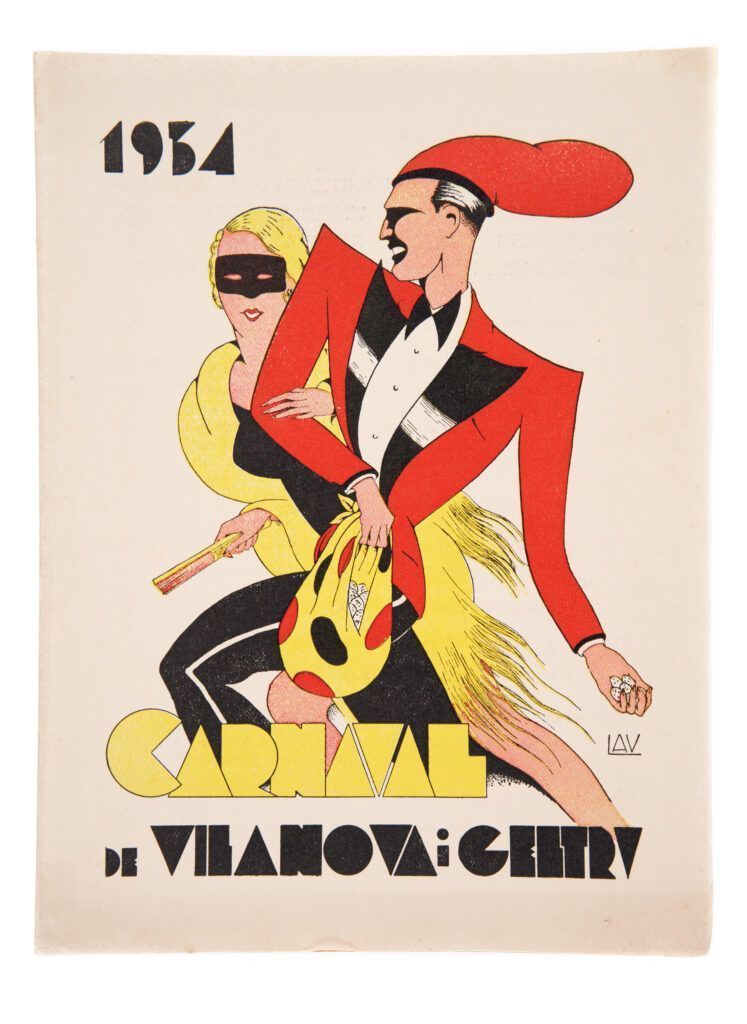
Carnival program of Vilanova i la Geltrú in 1934
1934
The Carnival of Vilanova i la Geltrú, already in 1934, was a festival with a long local tradition that stood out for its cultural richness and festive character: it was an attraction for both locals and foreign visitors who came to participate.
Garraf County Archive
Passeig Miramar in Cambrils. In the foreground the Casa Gatell restaurant, the Torre del Port and the boats moored at the Mollet del Rec.
1960
This photograph dated 1960 shows the Miramar promenade in Cambrils, with the Casa Gatell restaurant in the foreground, the Torre del Port and the boats in the Mollet del Rec. The Photo Raymond Collection, of which he is a part, demonstrates the evolution of the perception of tourism during the 1950s and 1960s, a period in which this company specialized in publishing postcards, a key activity for promoting the city as a tourist destination.
Historical Archive of Tarragona
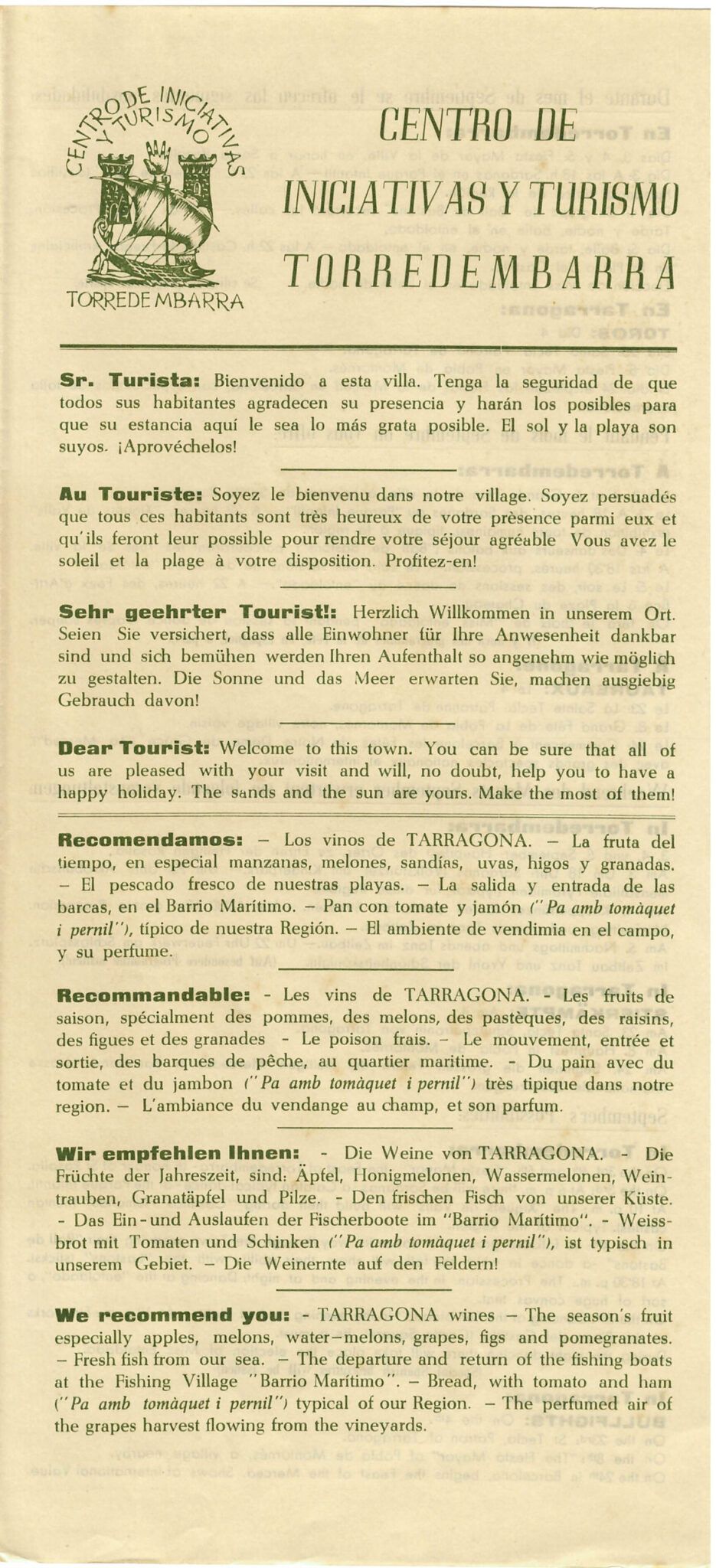
Multilingual tourist brochure
1966
This multilingual tourist brochure, published in 1966 by the Torredembarra Center for Initiatives and Tourism, is written in Spanish, French, German and English, showing a clear desire for internationalization and welcoming European visitors. It is a sign of the effort to attract tourists to the town, highlighting its attractions and promoting the discovery of new realities for foreigners.
Torredembarra Municipal Archive
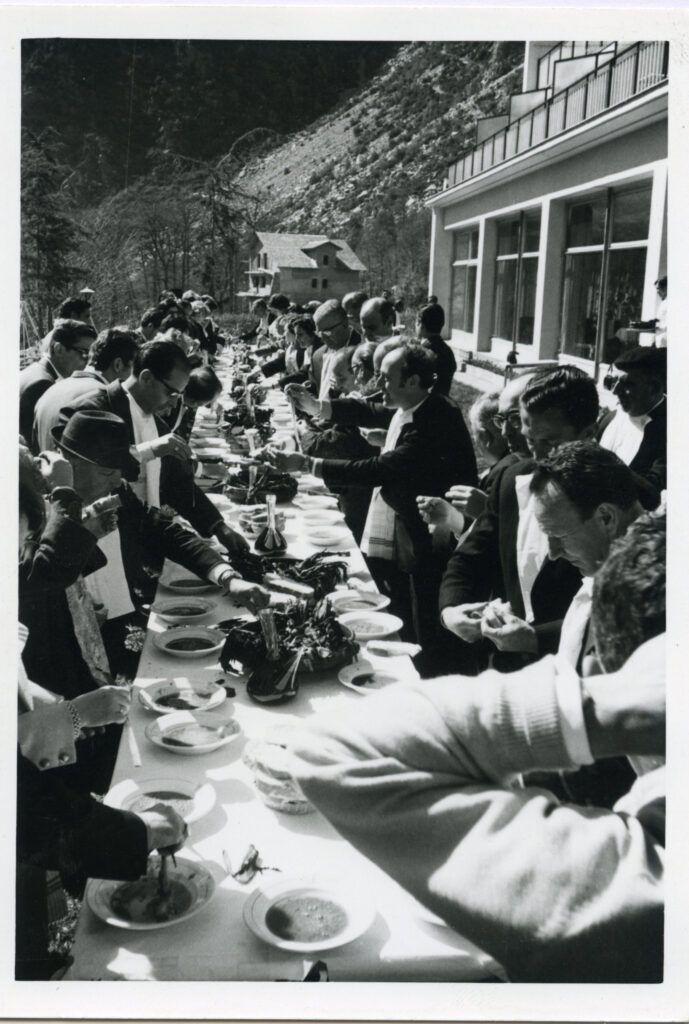
Calçotada in Andorra la Vella on the occasion of the twinning with Valls
1969
This photograph, taken by Alfons Galimany in 1969, documents a calçotada in Andorra la Vella on the occasion of the twinning with Valls. The calçotada, a gastronomic invention from Valls documented since 1906 and popularized from the 1920s, was institutionalized with events such as the “Grans Calçotades Artístiques de l’Olla” (1947-1956). The calçotada was already an indisputable tourist attraction for promoting Catalan culinary culture.
Valls Municipal Archive
Arrival of the 500,000th tourist at Girona-Costa Brava airport
1969
This photographic report captures the arrival of the 500,000th tourist at Girona-Costa Brava airport in 1969, an event that underlines the importance of tourism on the Costa Brava as a phenomenon of international relevance. The airport was a gateway to the Costa Brava as a consolidated destination not only for Catalan tourists but also for international visitors.
INSPAI (Image Center of the Girona Provincial Council)
Tourist photo albums of the community of Sant Pere de les Puel·les in the Sau reservoir (Osona) in the summer of 1971
1971
This photograph, taken from an album of the monastery of Sant Pere de les Puel·les in Barcelona, shows images of the Sau reservoir (Osona) during the summer of 1971, during one of the first vacations of the female Benedictine community. The opening of monastic life after the Second Vatican Council allowed for these activities, which reflect an adaptation of religious communities to the mass tourism phenomenon that Europe was experiencing in the late 1960s.
ACUB (Benedictine Cultural Area)
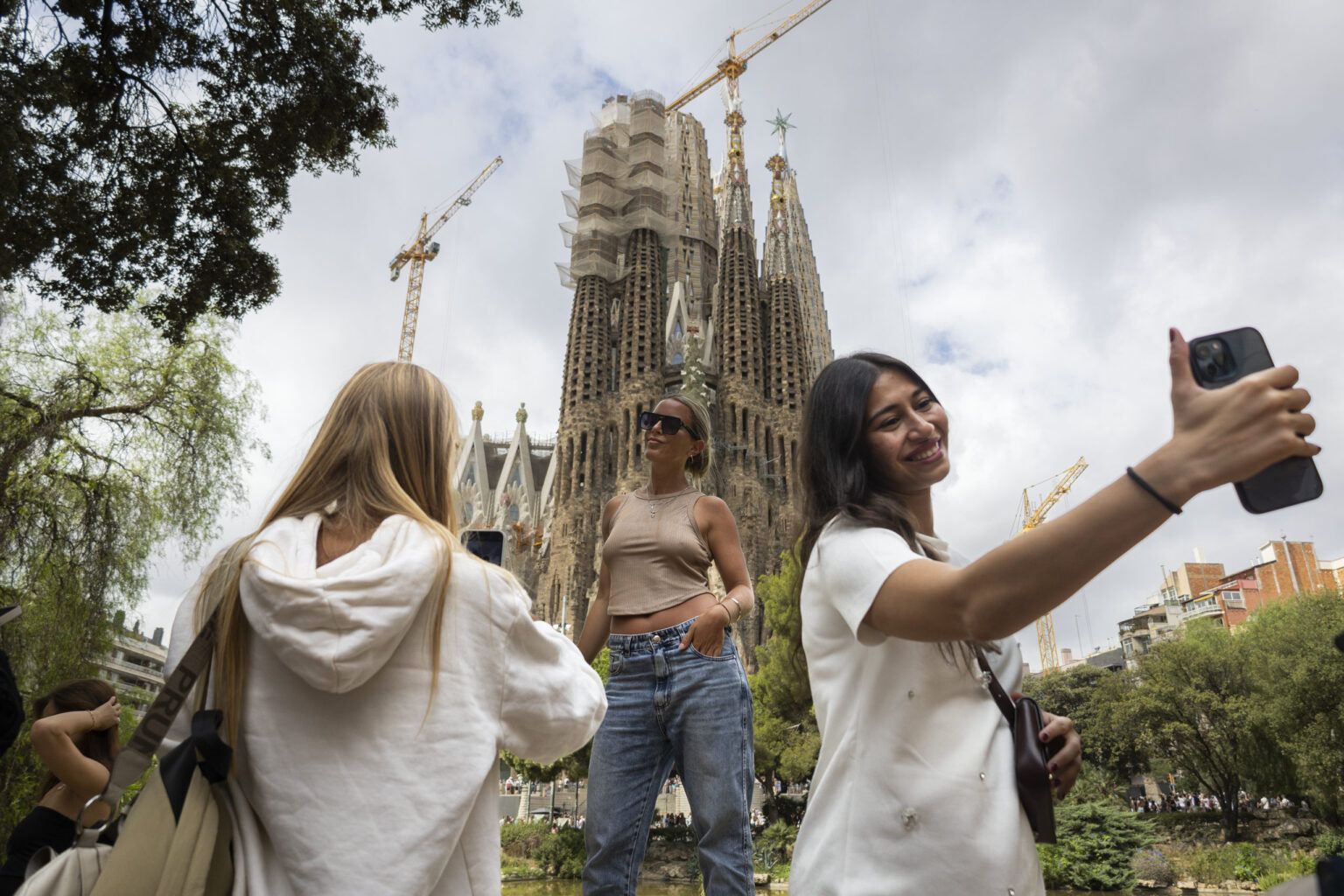
Barcelona, a theme park
2023
This photograph, dated 2023, is part of the exhibition “Barcelona, a theme park” and illustrates the impact of tourism as an economic driver both locally and European-wide. The photograph reflects on Barcelona’s transformation into a mass tourist destination, highlighting both its economic benefits and its social and cultural implications.
INSPAI (Image Center of the Girona Provincial Council)