The construction of contemporary autonomous Catalonia
The configuration of contemporary autonomous Catalonia is part of a historical process marked by institutional recovery after the abolition of self-government in 1714. The 1914 Commonwealth represented a first attempt to structure a modern administration, while the 1932 Statute, which emerged within the framework of the Second Republic, consolidated a model of autonomy truncated by the Civil War. The democratic transition and the 1979 Statute reestablished the Generalitat as a central institution, reflecting a desire to reconcile tradition and contemporary needs. This journey demonstrates a resilient society, capable of adapting to political changes while maintaining its own identity in the face of centralizing forces. The fight for autonomy was nourished by cultural and political movements, such as the Renaixença, which strengthened collective consciousness. Parliamentary debates and subsequent legislative reforms have consolidated this model
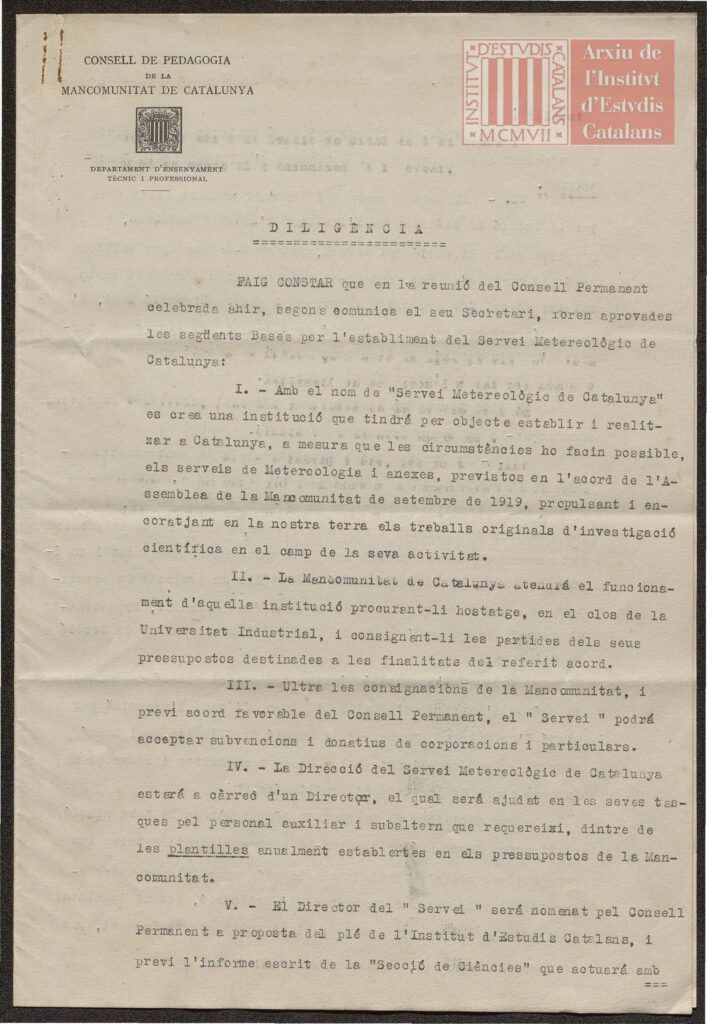
Due diligence on the bases of the Meteorological Service of Catalonia approved by the Commonwealth
1921
Documentation on the creation of the Meteorological Service of Catalonia in 1921, directed by Eduard Fontserè, based on the bases approved by the Permanent Council of the Commonwealth. It is a document that exemplifies the institutional effort of the Catalan self-government to develop scientific and technical public services.
Institut d’Estudis Catalans. Documentation and Archive Service
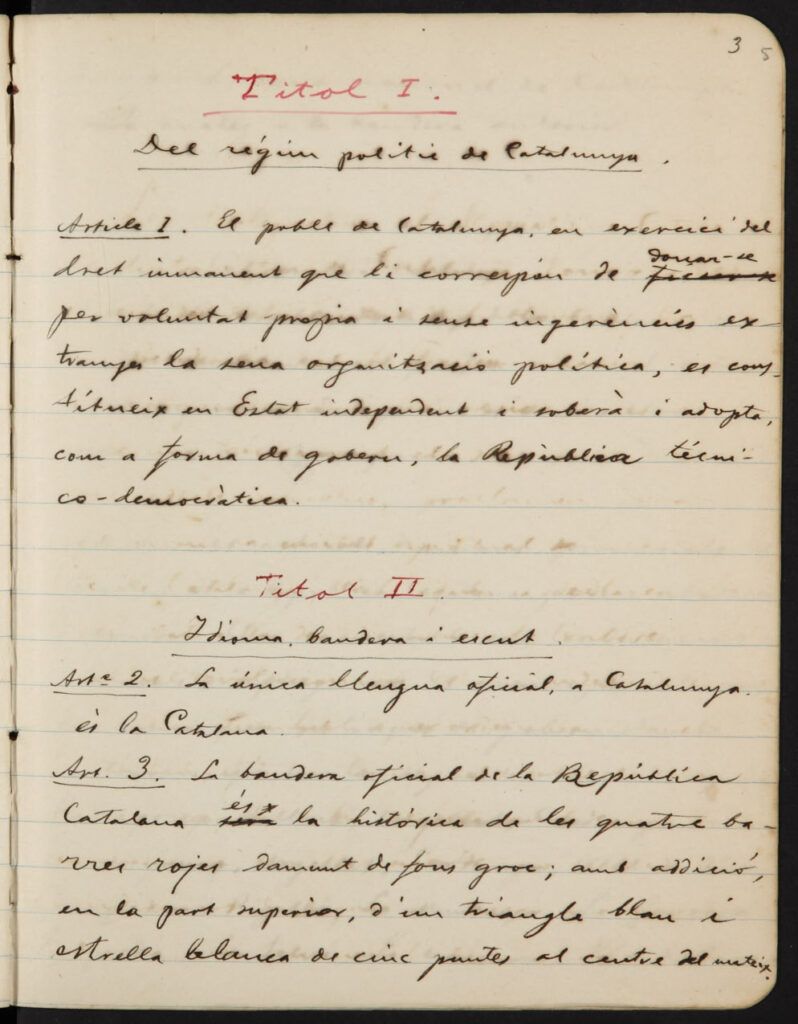
Draft Constitution of the Catalan Republic
1928
This draft Constitution of the Catalan Republic of 1928 is an attempt to define Catalan self-government in the context of the struggle for the recovery of sovereignty in the context of the dictatorship of Primo de Rivera. It is a testament to the political aspirations of a part of Catalan nationalism before the creation of the republican Generalitat.
National Archive of Catalonia
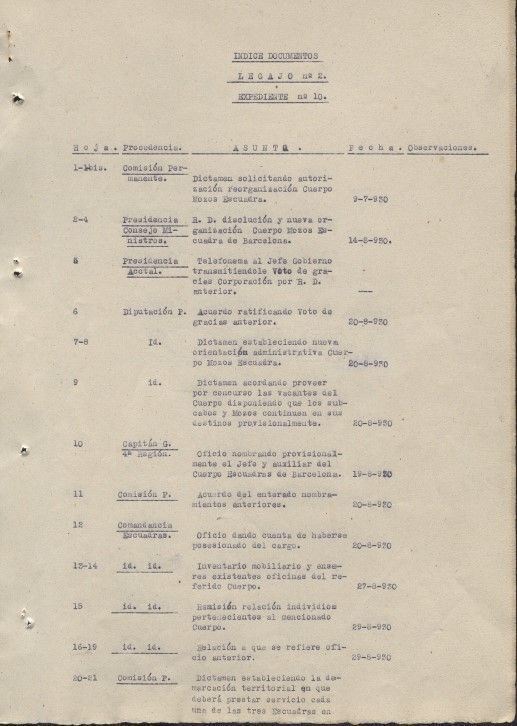
Dissolution file of the Squadron Corps according to the bases of the Royal Decree of August 14, 1930
1930
Record of the dissolution and reorganization of the Mossos d’Esquadres Police Force in the transition period between the Barcelona Provincial Council of the dictatorship and the proclamation of the Second Republic. This reorganization was approved by the Spanish Council of Ministers during the final period of the Primo de Rivera regime.
National Archive of Catalonia
Installation file of the National Museum of Catalonia in the Palau Nacional
1933
The creation of the Art Museum of Catalonia in the Palau Nacional, promoted by the new republican Generalitat, materialized in the field of cultural policy the commitment to the creation and consolidation of new public cultural institutions. These were considered a fundamental part of the construction of the new advanced and democratic Catalonia begun in the years of the Mancomunitat.
National Archive of Catalonia
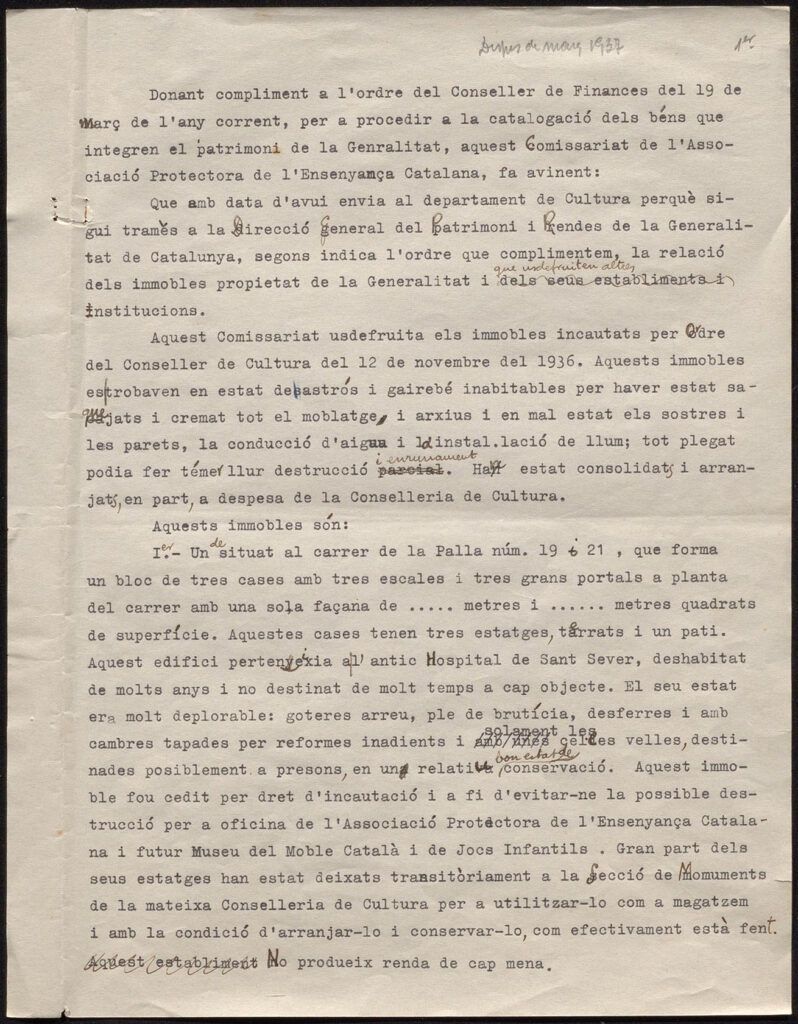
Inventory of the real estate of the Catalan Education Protection Association
1937
Inventory of assets of the Association for the Protection of Catalan Education during the Civil War, in 1937. The entity, linked to the promotion of Catalan and secular education under the Republican Generalitat, illustrates the efforts to maintain Catalan educational institutions despite the context of the war conflict. In 1939, the new Francoist dictatorial regime decreed its dissolution.
National Archive of Catalonia
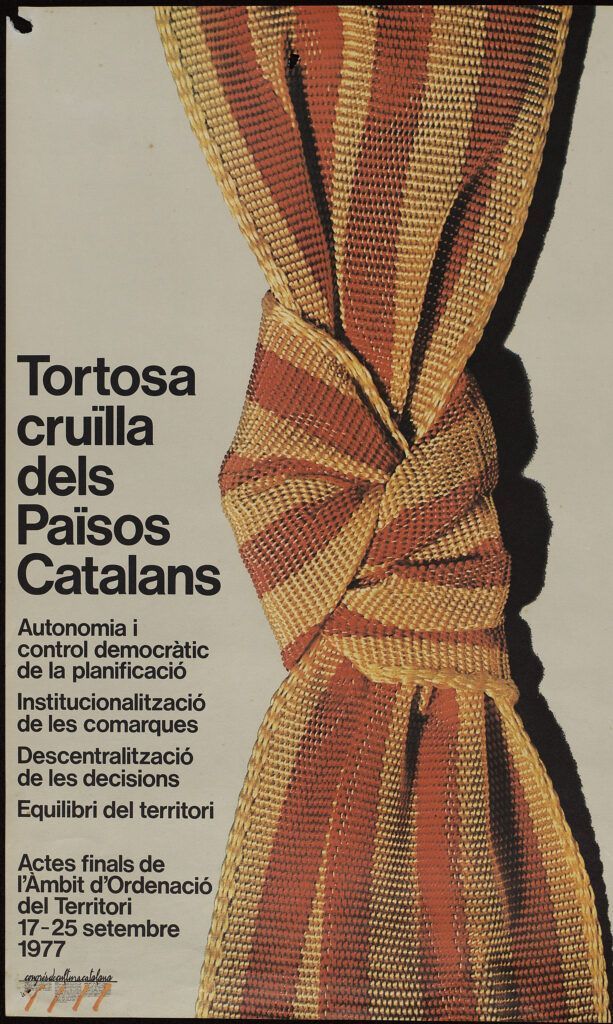
Poster for the Catalan Culture Congress in Tortosa
1977
Poster of the program of the final acts of the territorial planning area of the Congress of Catalan Culture held in Tortosa between 17 and 25 September 1977, in the midst of the democratic transition. The institution of the Congress testifies to the persistence for the recovery of political self-government and Catalan cultural personality in the post-Franco era after the death of the dictator.