Municipal organization in medieval Catalonia
Municipal organization in medieval Catalonia was a key element of its territorial structure. In most cases, cities were part of the royal jurisdiction and it was thanks to the prerogatives received from the monarch that they could self-govern. Local governments, led by councils representing the social classes, played an essential role in community management, often in tension with the lordly, ecclesiastical or royal power itself. In commercial towns, the influence of guild and religious corporations deeply marked this model, favoring a dynamic of competition and cooperation between populations throughout the Principality. Disputes over boundaries and resources were frequent, contributing to forging the territorial identity of that time. Medieval local organization established the bases of a municipalist ideology well rooted in the territory and the needs of the population, the memory of which lasted for centuries.
Book of Customs of Tortosa
1272
The Book of Customs of Tortosa is considered one of the first comprehensive legal texts written in Catalan and contains the rules that governed the territory of Tortosa. It includes the embryo of the maritime uses that were later developed in the institution of the Consolat de Mar. It is an example of the codification of autonomous local governance and Catalan identity through its own legal corpus.
Baix Ebre County Archive
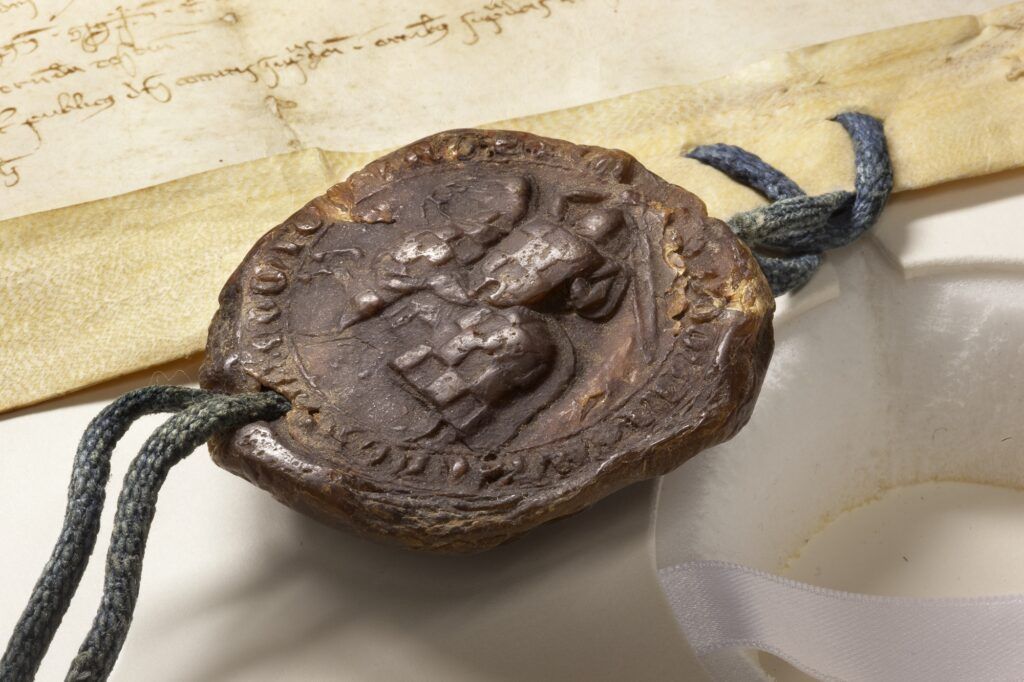
Seal of Count Ermengol X of Urgell
1289
This seal authenticated the political decisions issued by Count Ermengol X, reflecting his lordly power over the city of Balaguer and the towns of La Noguera. The seal is a mark of authority and of his institutional supremacy over the territory that legitimized his administrative actions over the local communities of his dependency.
Noguera Regional Archive
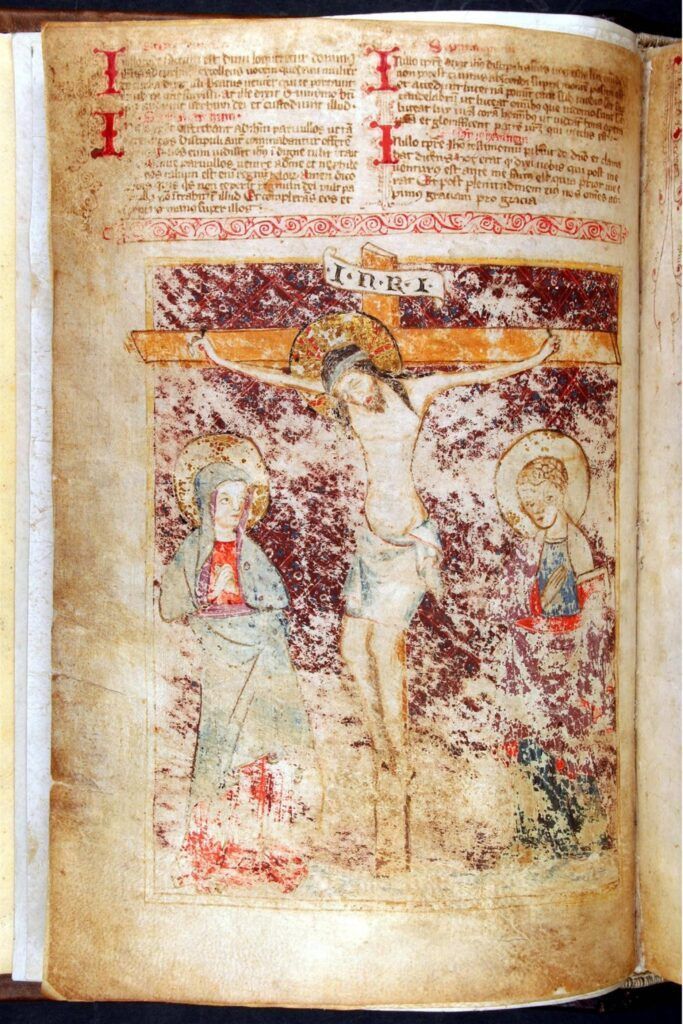
Book of Customs, Privileges and Ordinances of the City of Balaguer
1350-1435
Solemn book that compiles the privileges granted by the counts of Urgell and the monarchs of the Crown of Aragon to Balaguer, as well as the customs and ordinances that regulated community life until 1435. As a legislative compendium, the document was essential for local governance and reflects how cities strengthened their territorial ties through shared rules that ensured governance and social cohesion.
Conca de Barberà County Archive
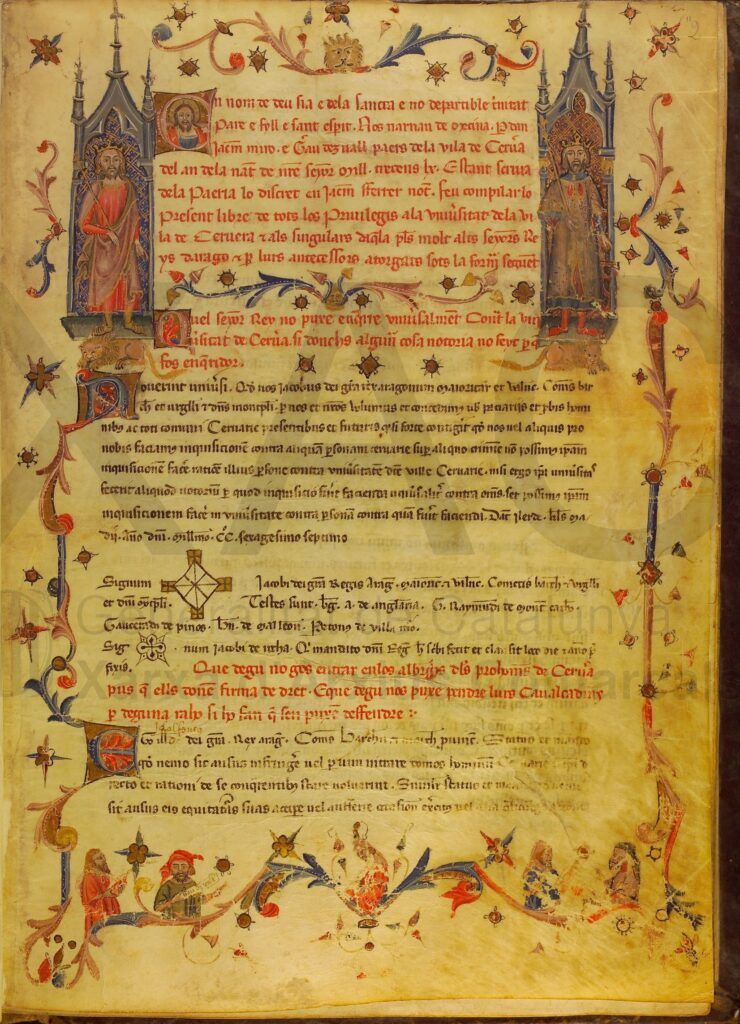
Book of Privileges of Cervera
Between 1360 and 1456
Declared a Cultural Asset of National Interest, this volume compiles the royal privileges granted to Cervera, covering aspects of political administration, taxation, justice and economic activity. The corpus of privileges received constituted the legal framework in which the town defended its self-government: they were a backbone of the administration and institutional relations in medieval and modern Catalonia.
La Segarra County Archive
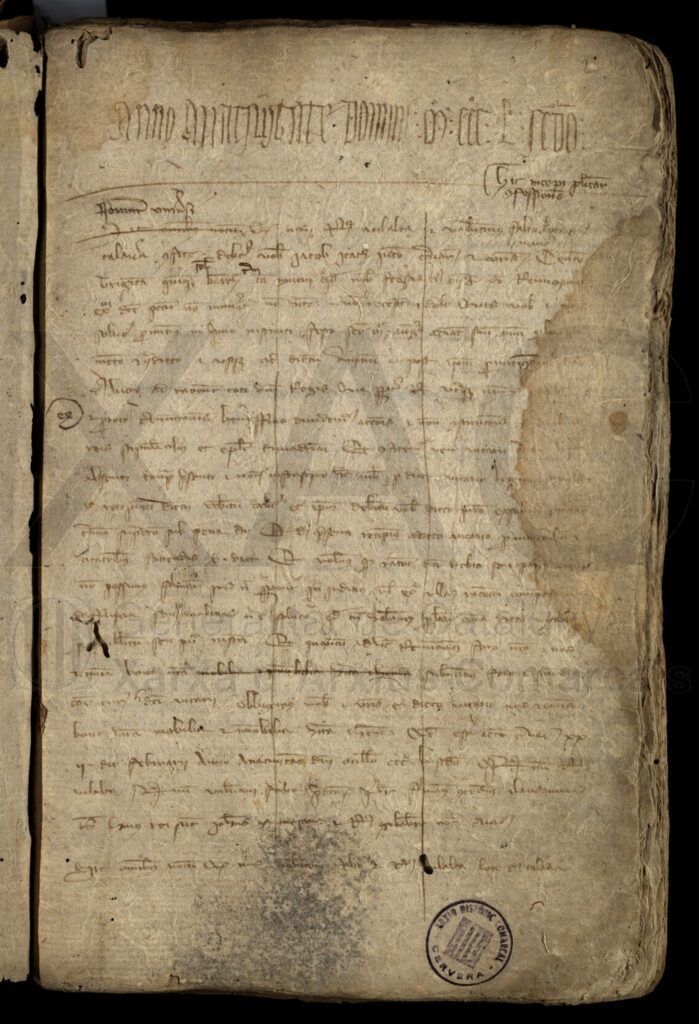
Book of Jews
1352-1354
In addition to the municipal council minutes, in Cervera one of the essential sources for delving into the daily life of medieval Catalan Jews are notarial documents, such as this volume by notary Ramon Rama. In addition to information relating to credit activities, its pages are of great interest for accurately understanding the daily life of the local Jewish community in the mid-14th century.
La Segarra County Archive
The Torah of the Walnut Tree
1300-1400
This fragment of a Torah scroll, dated to the 14th century and found in Balaguer, is a sample of the sacred texts of Catalan Judaism that refers to the community life of Catalan Jews in the territory.
Noguera County Archive
Confirmation by Pope Gregory XI of the uses and customs of the town of Tremp
1376
This papal document confirms the uses and customs of Tremp to stabilize the town and retain its population, preventing emigration, in an act of governance that strengthened the power of local authorities.
Pallars Jussà County Archive
Receipt of the contribution for the Vimbodí bonfire at the coronation of King Martin I the Humane
1399
Receipt that shows the participation of the town of Vimbodí in financing the coronation of Martí I through the fire tax, an example of the taxation of municipalities, small or large, in medieval Catalonia. The document shows how the decisions of the monarchy impacted local communities, in this case in Conca de Barberà and the municipality of Poblet.
Conca de Barberà County Archive
Privilege of Martí the Humane in which he grants, in perpetuity, the right of free passage through the places and towns of l’Arboç and Vilafranca del Penedès
1401
Privilege issued by Martí the Humane in 1401, granting the right of free passage to the inhabitants of Banyeres del Penedès through l’Arboç and Vilafranca del Penedès, reinforcing the territorial ties between these towns. The document, on parchment, has the historical value of illustrating how royal privileges in favor of local inhabitants contributed to cohesion and mobility within the Catalan territory.
Baix Penedès County Archive