Daily life in inner Catalonia
Daily life in inland Catalonia has been shaped by a rural environment where farmhouses and villages have been the axis of social and economic organization. These communities, based on agriculture and livestock, developed forms of housing adapted to the landscape, such as manor houses, a reflection of an identity rooted in the land. In the 20th century, the rural exodus and modernization transformed these spaces, but their legacy endures as a testament to a society rooted in the face of historical changes and the adversities of the environment. Traditions and agricultural cycles marked the rhythm of life, with a subsistence economy that was maintained for centuries. The influence of the Church also had a notable weight, organizing community life. Inland Catalonia offers an example of continuity and adaptation over time.
The town of Albi creates a census in favor of Gerard de Basquerà, from Falset
1376
This parchment document, the oldest kept in the Les Garrigues Regional Archive, is a sample of daily life and economic and social relations in a rural town like Albi during the 14th century, through the creation of a census.
Les Garrigues County Archive
Concord between the Bishop of Urgell and the universities of the Honor of Galliner with the nobleman Ramon Roger d’Orcau on terms
1393
Concordia that establishes a political and legal agreement between the Bishop of Urgell and the communities of the Honor of Galliner on boundaries and resources, reflecting the pactist governance of the villages in rural Catalonia. “Concordia” were a basic legal instrument of rural mountain communities throughout the continent during the medieval and modern centuries, to resolve issues entrenched through the judicial process or agreements to avoid reaching the manorial or royal courts.
Pallars Jussà County Archive
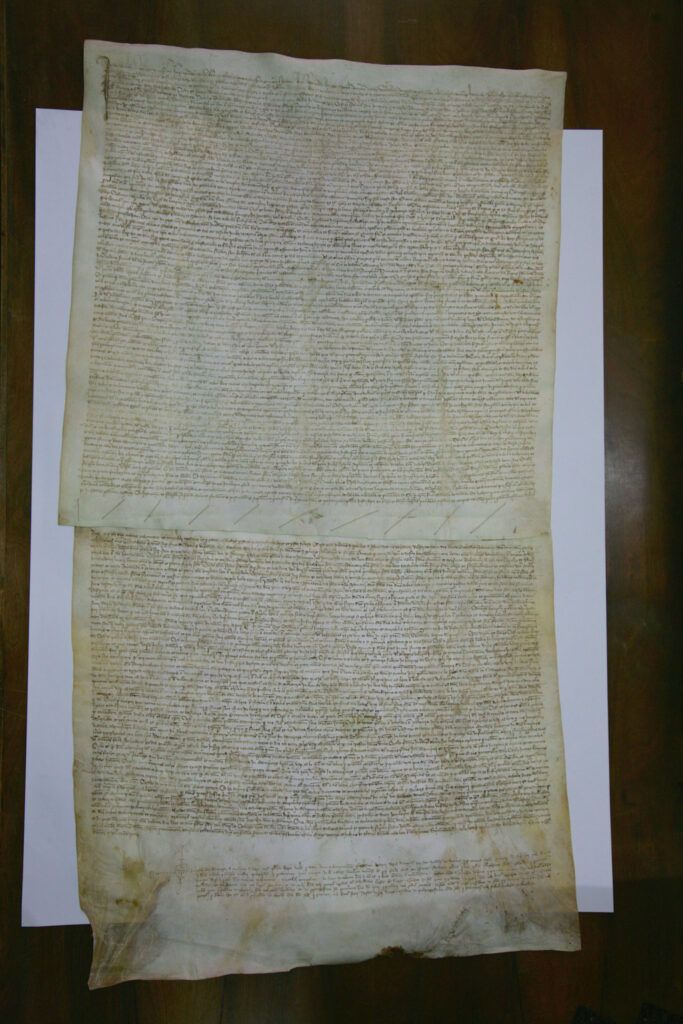
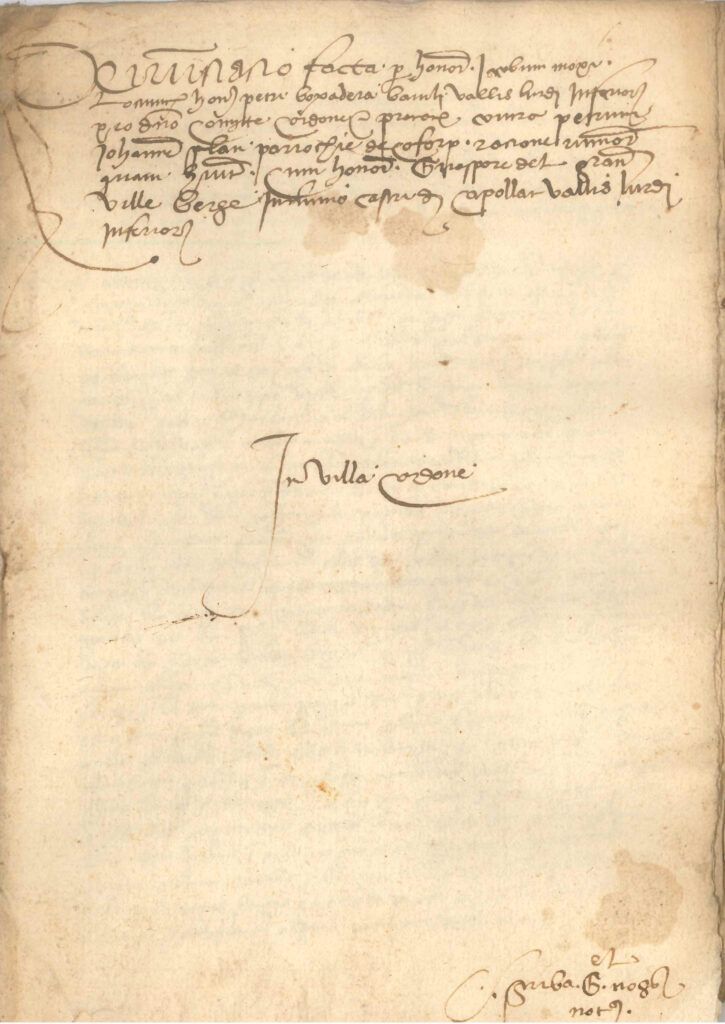
Complaint by Jaume Moxí, lieutenant of the mayor of the Lord valley, against Pere Joan Solan, of Coforb, for a rumor with Gaspar del Graner, of Berga, in the area of the Capolat castle in the Lord valley below
1538
This modern-day judicial process documents a conflict in a rural area like the Lord Valley, reflecting not only the legal but also the social dynamics inherent in a geographical area dominated by farmhouses and rural towns, where rumors and disputes were part of community relations that could reach justice, as was the case in this case.
Berguedà County Archive
Notarial deed of compliance with the arbitration award between La Pobla de Massaluca and Vilalba dels Arcs
1541
Documentary showing a territorial conflict between two rural towns, resolved through an arbitration ruling based on Roman law. Territorial delimitations such as the one at the center of this legal agreement were essential for social coexistence and peace.
Terra Alta County Archive
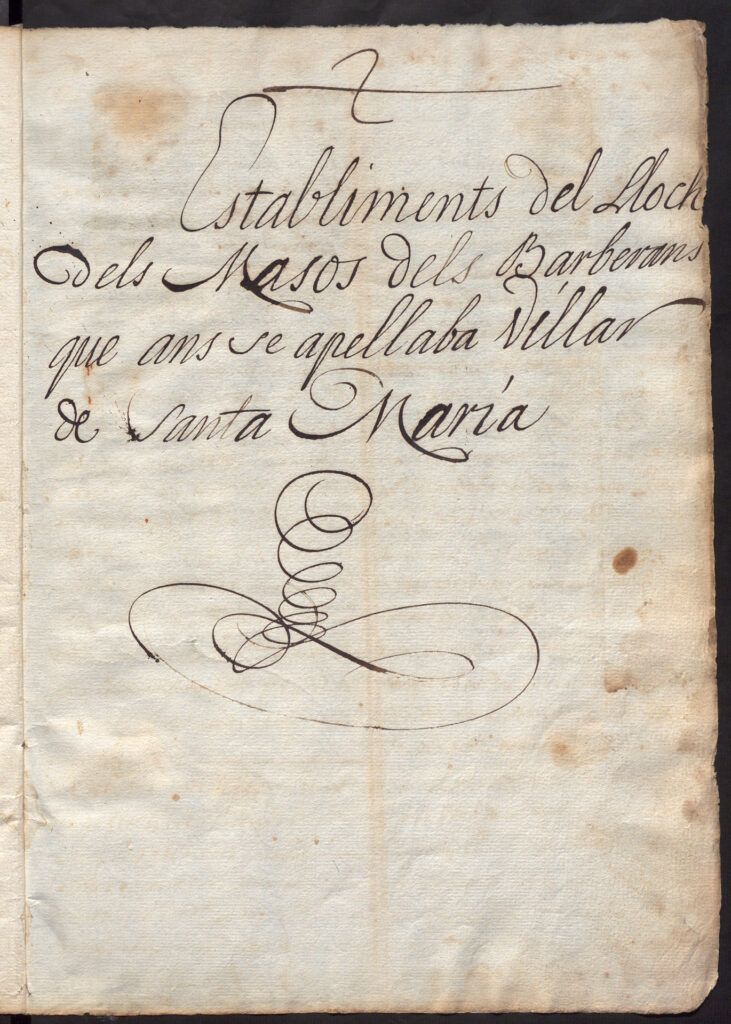
“Establishments of the place of Mas de Barberans which was formerly called Villa de Santa Maria”
1680-1840
This is a document that testifies to the rules of coexistence and the fines that had to be paid for infringing the rules established in this place and that at the same time testifies to the way of life of a rural village in Montsià in the 17th century.
Montsià County Archive
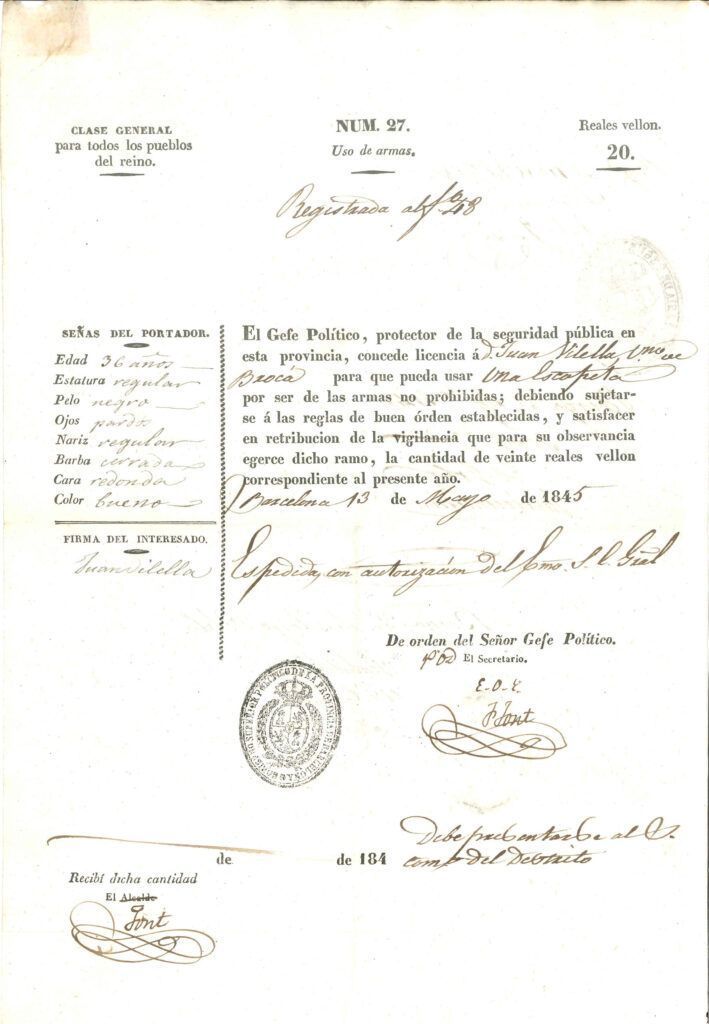
Weapons license granted to Joan Vilella, from Brocà, by the military authorities with indication of the person’s details
1845
This document, issued in a conflictive period in the mid-19th century during the Carlist Wars, shows the controls imposed on the rural population, including the inhabitants of farmhouses and small towns such as the Brocà area.
Berguedà County Archive
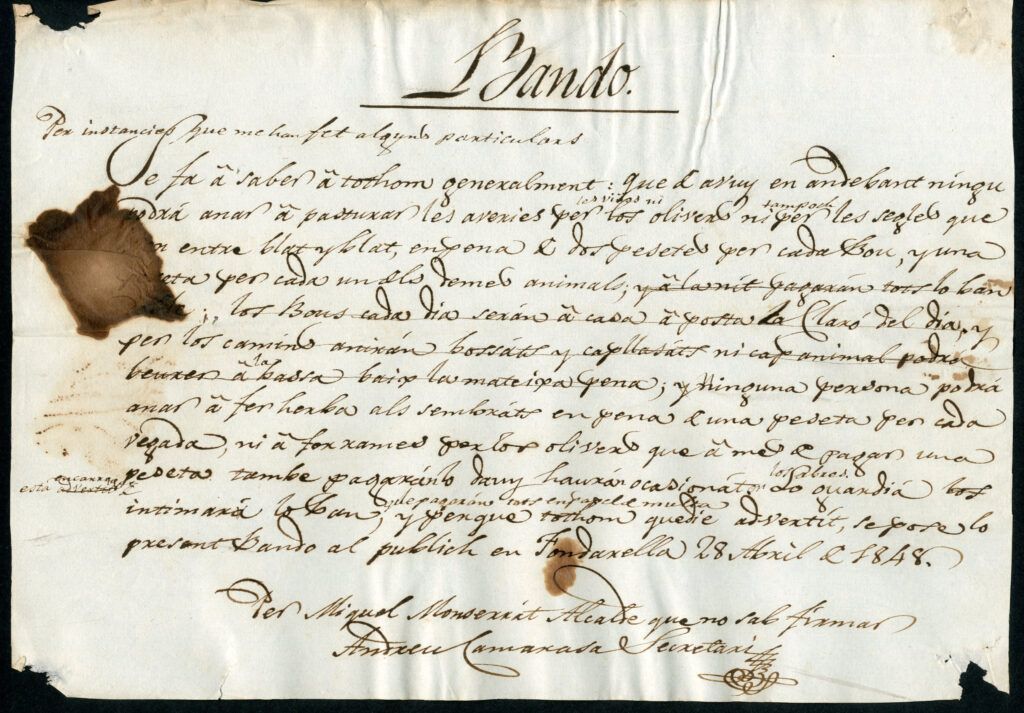
Proclamation of the Fondarella Town Hall
1848
This municipal ban documents the local administrative regulations in a rural town like Fondarella. Municipal bans like this were essential for the coexistence and stability of the citizens.
Pla d’Urgell County Archive
Geometric-topographic map of the municipality of Sant Miquel de Campmajor
1883
This geometric plan, along with five others in the municipality, becomes evidence of the topographical reality of the town of Sant Miquel de Campmajor at the end of the 19th century, being unique for its antiquity and existence, as it is a rural town.
Pla de l’Estany County Archive
Personal diary of a rural police officer Francesc Colomines
1889-1893
Personal diary of Francesc Colomines, rural police officer, which includes his personal notes between the years 1889 and 1893, becoming a unique source for the history of citizen security in inland Catalonia.
Municipal Archive of Santa Perpètua de Mogoda
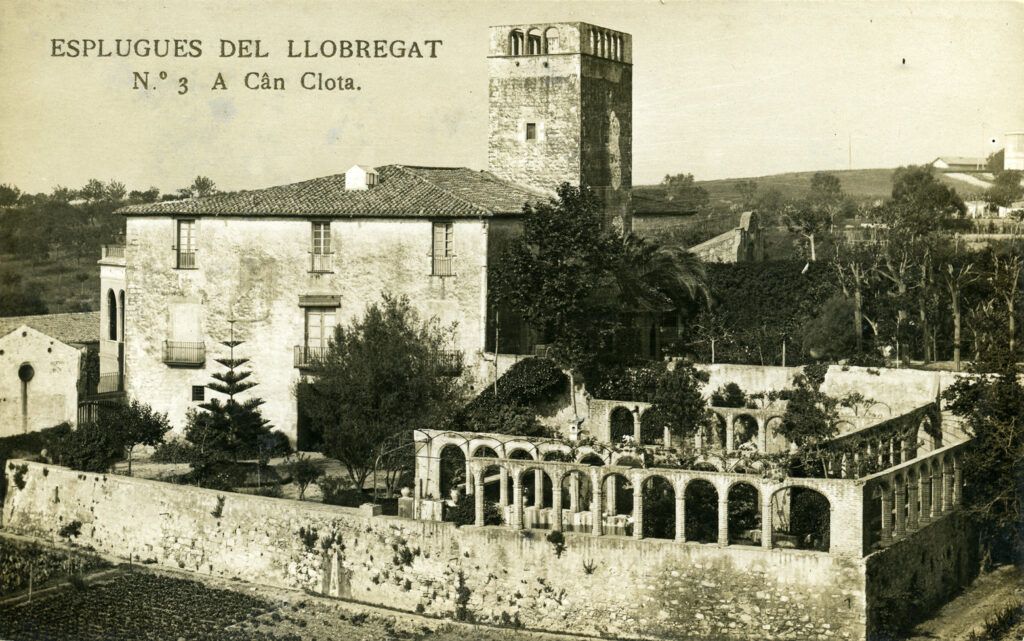
Can Clota, house of the Barony of Vilagaià, in the 1910s
1910-1920
In the 21st century, the surname Clota has given its name to one of the neighborhoods of the city of Esplugues de Llobregat, but its origin dates back to the 14th century, when what was there was a fortified classical farmhouse, with Renaissance and neoclassical elements. It is a documentary example of an originally isolated rural architecture, today fully incorporated into the urban fabric and declared a Cultural Asset of Local Interest.
Municipal Archive of Esplugues de Llobregat
It was the Casa Canal d’Urgell in full swing of activity.
1920
This 1920 image shows the era of the Casa Canal d’Urgell in full swing of threshing, a traditional technique for separating grain from chaff, essential in the cereal agriculture of the Pla d’Urgell. The photograph reflects the collective organization of agricultural tasks, facilitated by the irrigation of the Canal d’Urgell, which transformed the region into a key productive area.
Pla d’Urgell County Archive
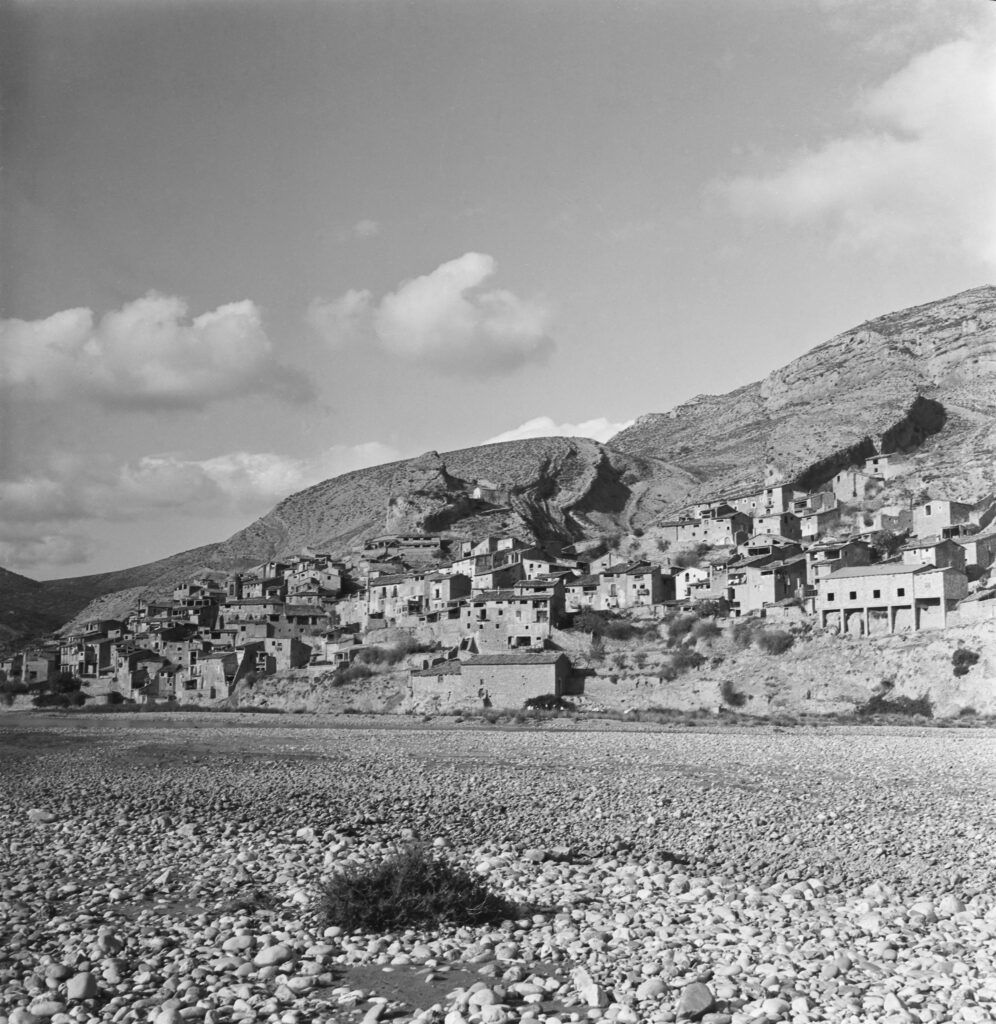
General view of the village of Tragó de Noguera from the Noguera Ribagorçana river
1961
Photograph of the disappeared village of Tragó de Noguera, captured in the early 1960s, following the flood that made it disappear under the waters of the Santa Anna reservoir. The former municipality of Tragó de Noguera included the villages of Tragó de Noguera, Blancafort, Canelles, Boix and Alberola; except for Alberola, all of these villages were abandoned and flooded following the construction of the Canelles and Santa Anna reservoirs.
Arxiu Comarcal de la Noguera