Catalonia at war and in the post-war period
The Civil War and the post-war period left a deep mark on Catalan society, with an impact that resonates in its collective history. Between 1936 and 1939, the conflict divided communities and tested resistance to violence and subsequent repression. The post-war period, under the Franco regime, imposed a period of silence and reconstruction, with lasting consequences on the social and cultural structure. These experiences reflect the heartbeat of a society capable of overcoming adversity, keeping its identity alive despite historical onslaughts. Popular mobilization during the war and the subsequent repression left deep marks on the community fabric. Recovery was slow, with efforts to preserve language and culture in an adverse context. The war and post-war period constitute a chapter of resistance and transformation in contemporary Catalonia.
“Les ambitions du fascisme européen. Appel que le Syndicat des Employés des Postes
espagnols fait à tous les travailleurs postaux du monde” (“The ambitions of European fascism. Appeal that the Syndicat des Employés des Postes espagnols fait à tous les travailleurs postalaux du monde”)
1937
This manifesto, published in 1937 by the Union of Postal Employees, denounces the ambitions of European fascism and calls on postal workers around the world to show solidarity with the republican cause. It shows the awareness and resistance of the Catalan and Spanish trade union sectors in the midst of the Civil War. This document demonstrates the active role of Catalan civil society in the ideological struggle and its connection to the European context, offering a key testimony to the international mobilization during the conflict.
National Archive of Catalonia
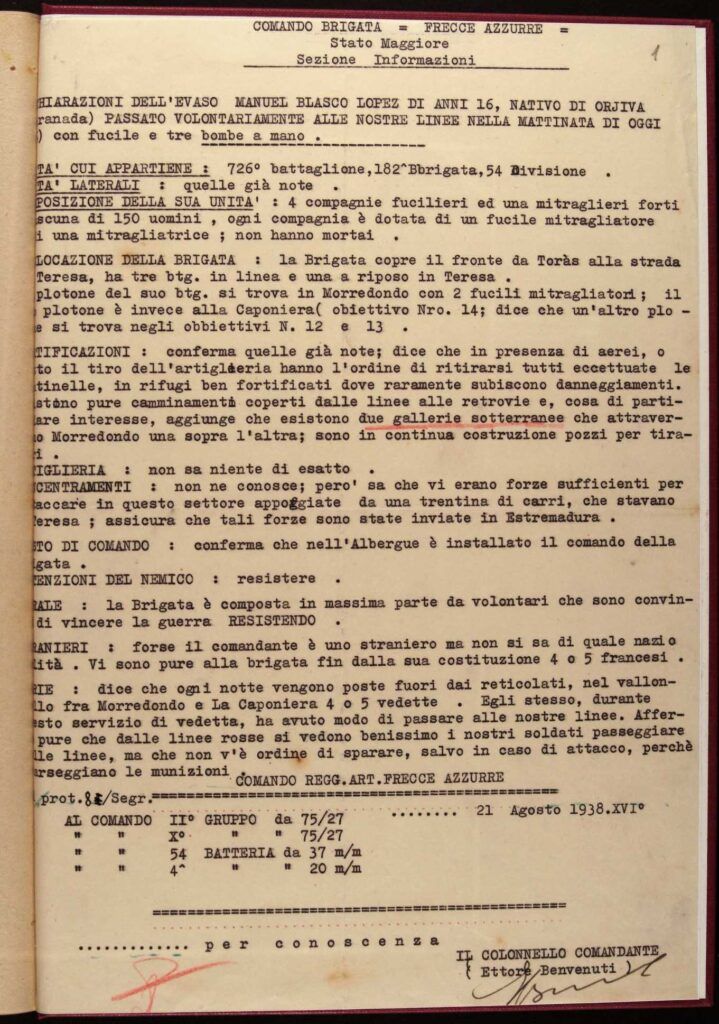
Blue Arrows General Staff. Information session. Declaration of a deserter
1938
Coming from the General Staff of the Blue Arrows, a Falangist organization, this 1938 document contains the declaration of a deserter in the midst of the Civil War. Although it does not have an extensive justification, its importance lies in providing an inside view of the tensions and desertions within the Francoist side in Catalonia during a critical moment of the conflict. This first-hand testimony illustrates the fragility of cohesion within the Francoist ranks and enriches the understanding of the war events from an unusual perspective.
National Archive of Catalonia
Leaflet thrown over Barcelona on the eve of the francoist occupation on January 26, 1939, urging Barcelona residents not to leave the city or their homes.
1939
This leaflet, dropped over Barcelona in 1939 just before the entry of Francoist troops on January 26, urged the population to remain in their homes, capturing the climate of tension and uncertainty of the last days of the Civil War in the city. It is a testament to the end of the conflict and the beginning of Francoist repression, with exceptional relevance for understanding the immediate impact of this key moment on Catalan society and the transition to the post-war period.
National Archive of Catalonia
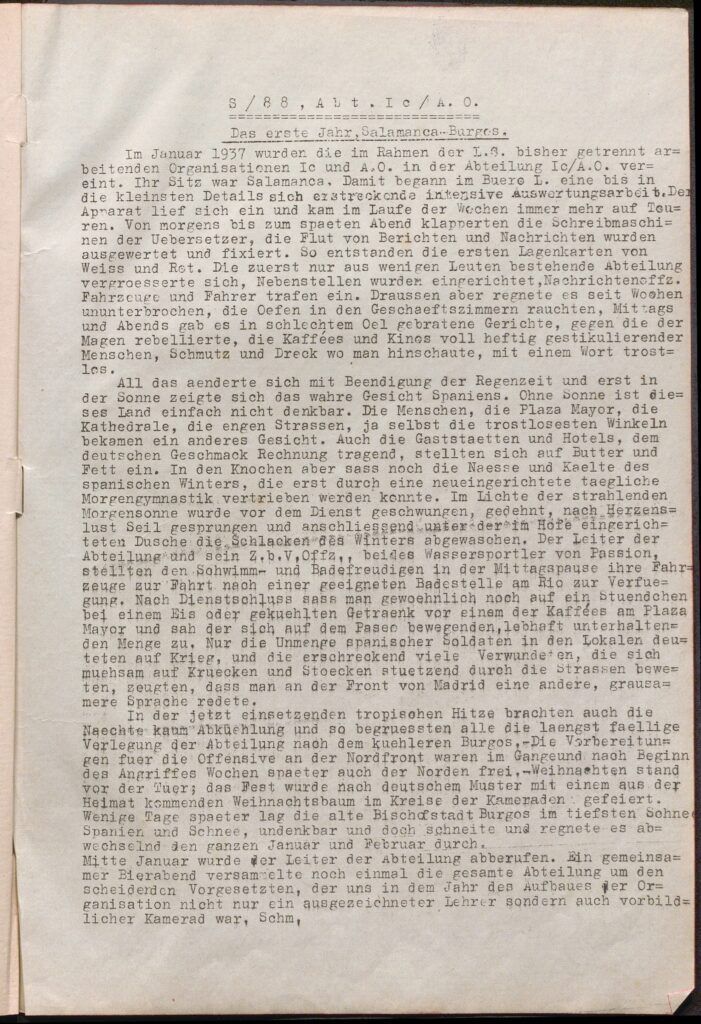
“Ernstes un Heiteres von S/88, Ic/A.O. In Spanien (1937-1939)”: memories and anecdotes of the headquarters of the Condor Legion
1939 (referred to 1937-1939)
These memoirs and anecdotes from the staff of the Condor Legion, published in 1939, collect the experiences of the German air force that supported Franco’s side, with actions such as the bombing of Catalan cities between 1937 and 1939. It offers a perspective on the intervention of the Axis powers in the Civil War, especially on the devastating impact of the air attacks on Catalonia, connecting the local conflict with its international dimension.
National Archive of Catalonia
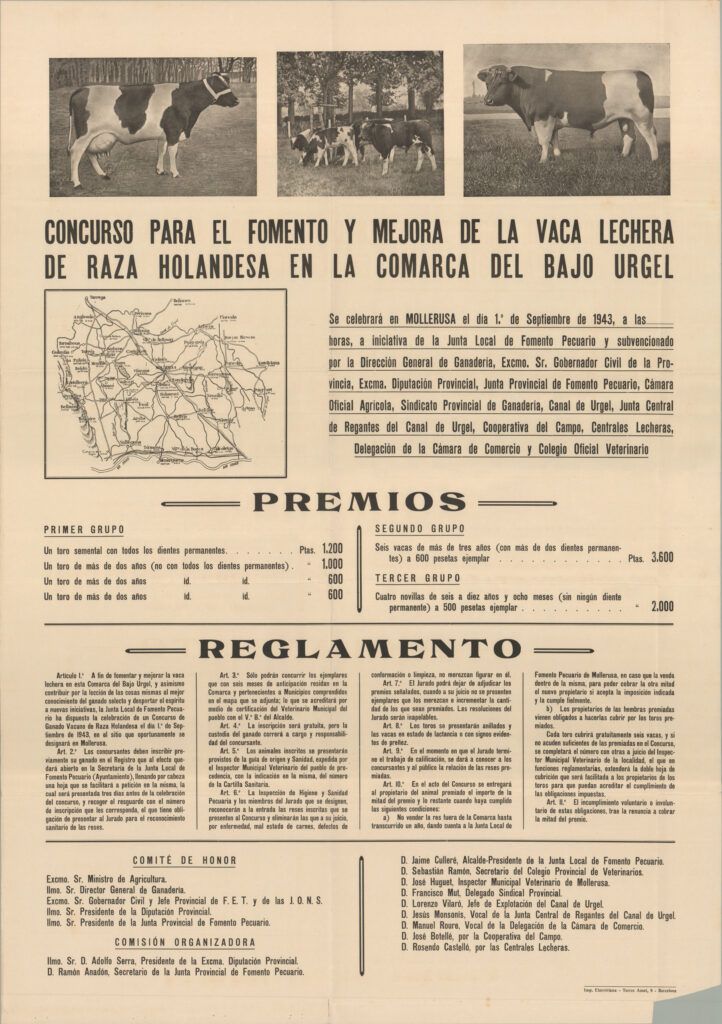
Competition for the promotion and improvement of the Dutch dairy cow breed
1943
This 1943 image documents a competition in the Pla d’Urgell to promote the improvement of the Dutch dairy cow, an effort to revitalize the agricultural economy in the early post-war years under the new regime. It is a documentary example of economic reconstruction and subsistence initiatives in a context of great difficulties, offering a vision of rural life in Catalonia during this period of repression and transformation.
Pla d’Urgell County Archive
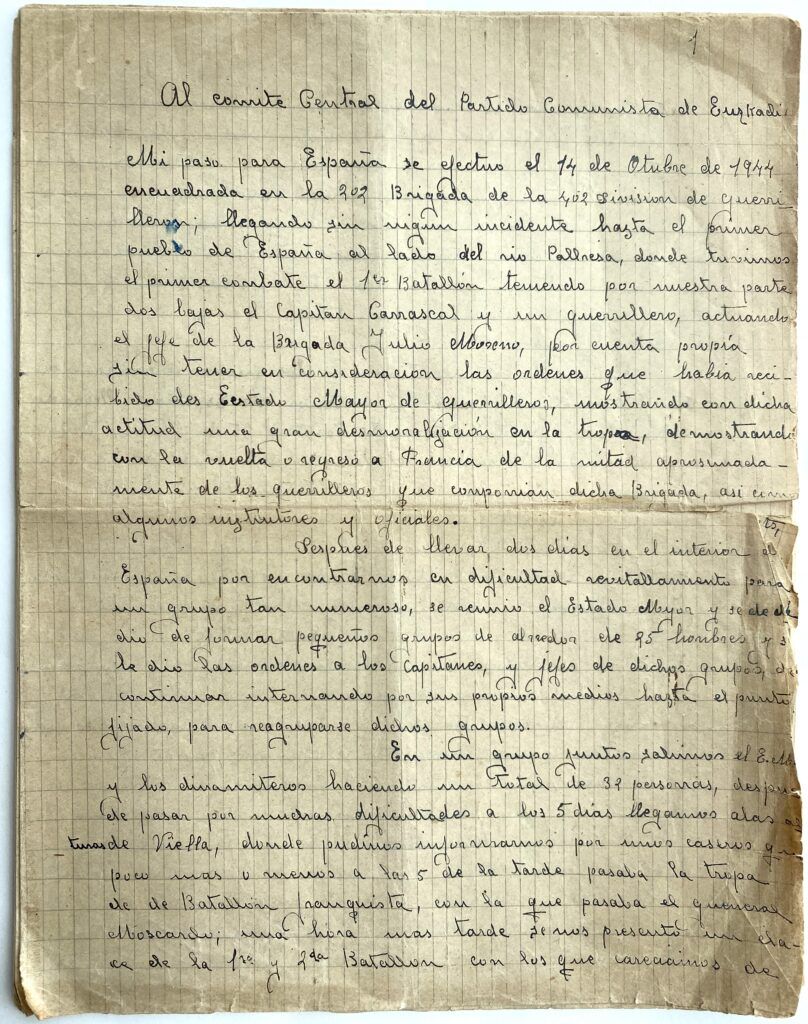
Memoirs of Ramona Zufiaurre Urquiola, Basque communist brigadier
1944-1947
Written between 1944 and 1947, these memoirs by Ramona Zufiaurre Urquiola, a Basque communist brigadier, offer a personal testimony of the anti-Franco resistance in the years immediately following the Civil War, essential for understanding the continuity of political and social resistance in the post-war period.
National Archive of Catalonia
Photograph of trucks loaded with logs in front of the snowy Pedraforca
1940-1950
Captured during the 1940s, this photograph shows trucks loaded with logs in front of the snow-covered Pedraforca, in Berguedà, and allows us to learn details of daily, social and economic life through elements such as the landscape and industrial forestry exploitation. The record documents the economic activities of subsistence in rural Catalonia during the post-war period, a period marked by the need for reconstruction and adaptation to the difficult conditions of the dictatorship.
Berguedà County Archive
Safe conduct record book to go to Andorra
1948-1958
This register book documents the safe conducts required to travel to Andorra, highlighting the restrictions on movement imposed in post-war Spain. These permits, signed by the Civil Governor after background checks, reflect state control and surveillance over the Catalan population in the final years of the post-war period.
Historical Archive of Lleida
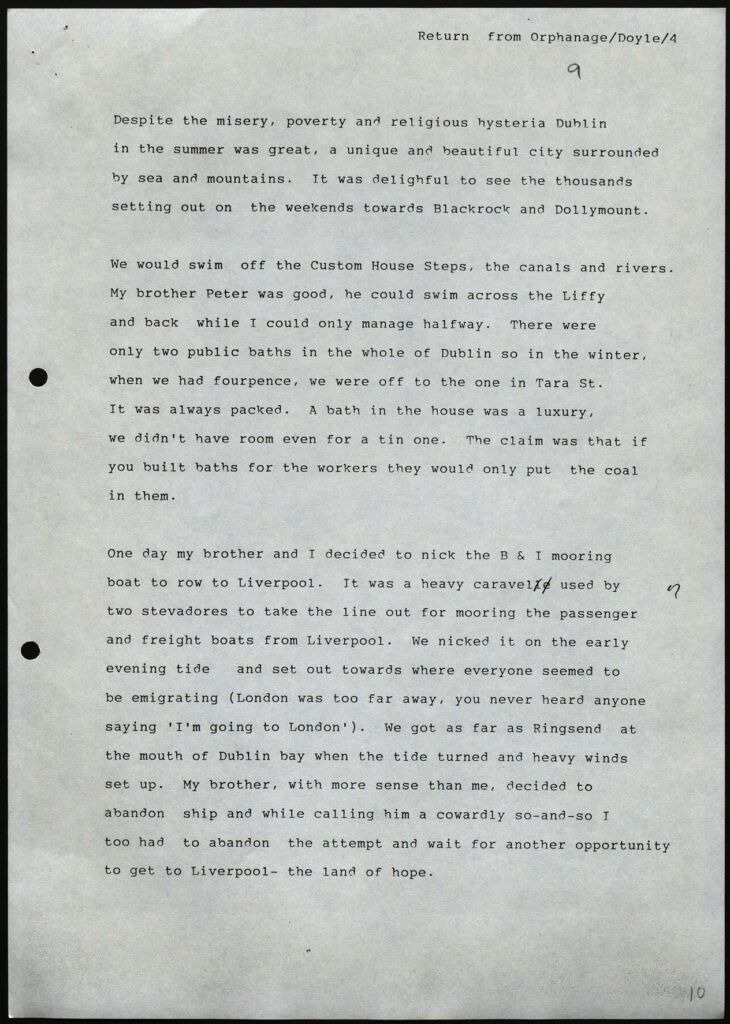
“Rebel Without a Pause. The memoirs of Bob Doyle” (autobiographical writing of the Irish Brigadier Bob Doyle)
1990-2002 (referred to 1936-1939)
Written between 1990 and 2002, this autobiographical writing by Bob Doyle, an Irish brigade member, recounts his experiences during the Civil War, including combat in Catalonia. Its relevance lies in providing an international perspective on the conflict, highlighting the support of the International Brigades for the republican cause and connecting the local struggle with European solidarity. Although written later, it offers a valuable account of the war events in Catalonia.
National Archive of Catalonia