Migrations in Catalonia: A Historical and Cultural Legacy
Migratory movements have been fundamental in the configuration of Catalonia over the centuries, leaving a significant mark on its identity and social, economic and cultural dynamics. As early as the 16th century, thanks to its border position with France, Catalonia welcomed significant migratory flows, which influenced the economy and contemporary Catalan society. From the second half of the 19th century, industrialization led to a migratory wave of extraordinary magnitude, with the arrival of an increasingly large number of people from the rest of the Spanish State. This phenomenon was key to Catalan economic growth, also contributing to urban transformation. However, it is crucial to remember that immigration has not always been a voluntary process. Throughout history, slavery and war conflicts have forced people to abandon their homes and seek refuge in Catalonia, a fact that underlines the complexity and diversity of migratory movements.
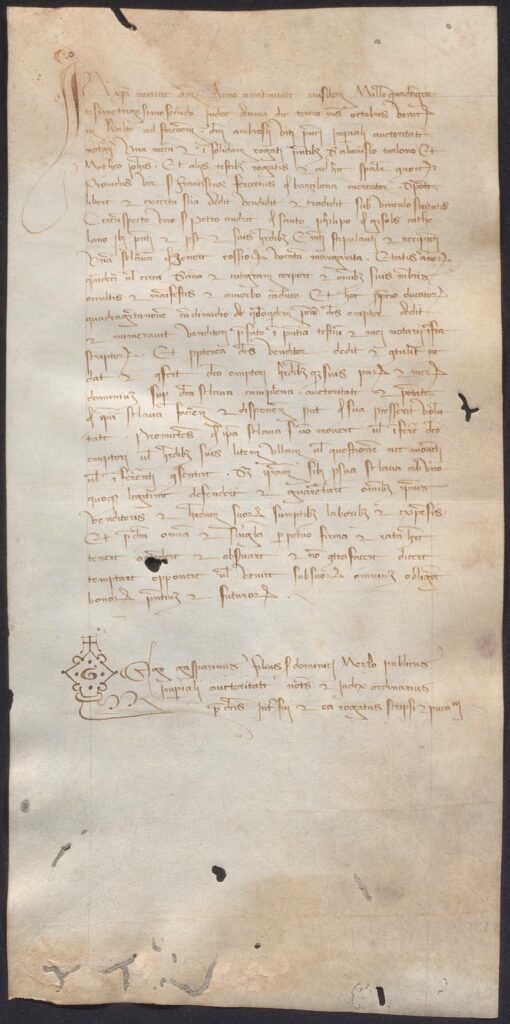
Sale of a young Slavic woman forced into slavery
1432
A record documenting the sale of a Slavic woman forced into slavery on the island of Venice on 13 October 1432, with the involvement of Catalan merchants, highlighting forced immigration through the slave trade in medieval Europe. The girl was called Margarida and was sold by the Barcelona merchant Francesc Ferrer to Pere Andreu, from Sant Feliu de Guíxols. It is a prime example of the Catalan presence in the Mediterranean slave market.
National Archive of Catalonia
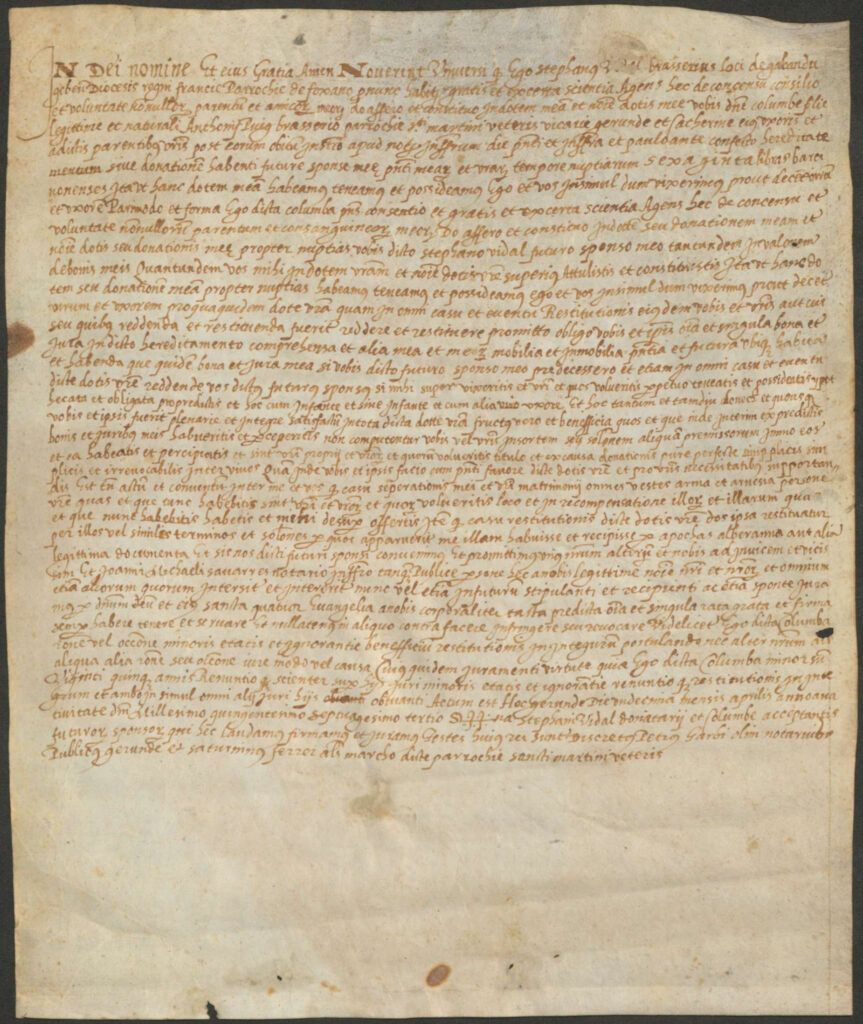
Wedding of Esteve Vidal, French immigrant, with Coloma
1573
This register documents French immigration to Catalonia in the 16th century, particularly in the Empordà region, where they were often the object of repression by the Catalan authorities. Documents like this one make clear the integration of newcomers into Catalan society through marriage.
Historical Archive of Lleida
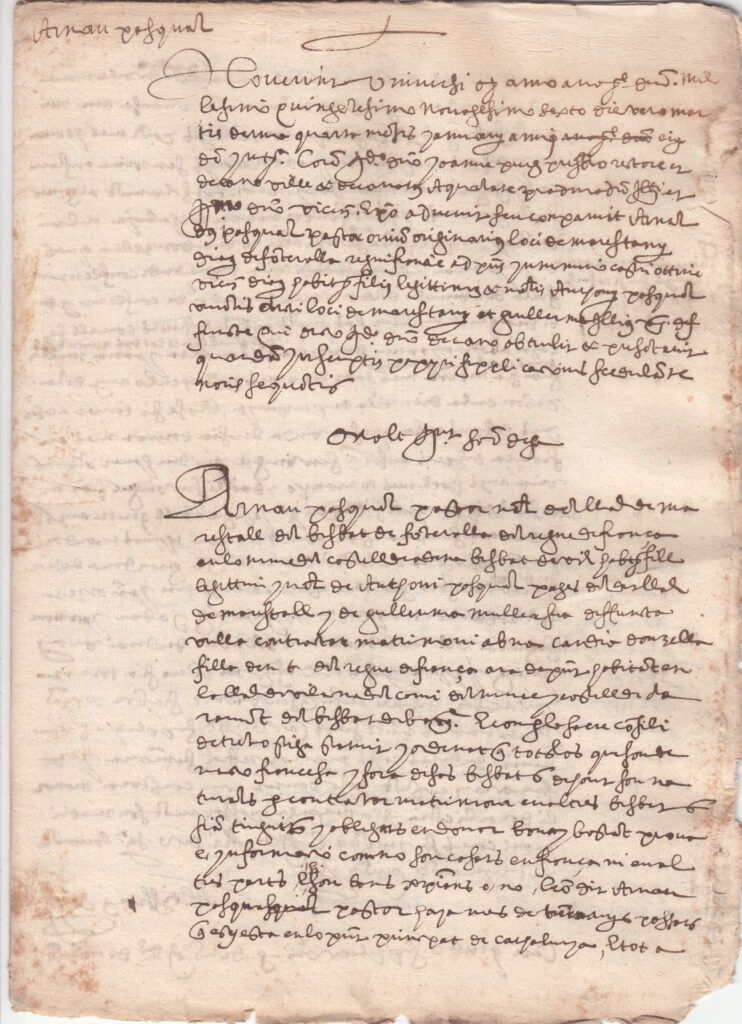
Single certificate of a young man from Occitania in the 16th century
1596
Document on migrations from Occitania to Catalonia during the 16th century. The certification of singleness of a migrant individual to formalize a marriage in Catalonia underlines the integration of these newcomers into Catalan society, a phenomenon that reflects the history of cross-border contacts and cultural ties on both sides of the Pyrenees in the modern era.
Anoia County Archive
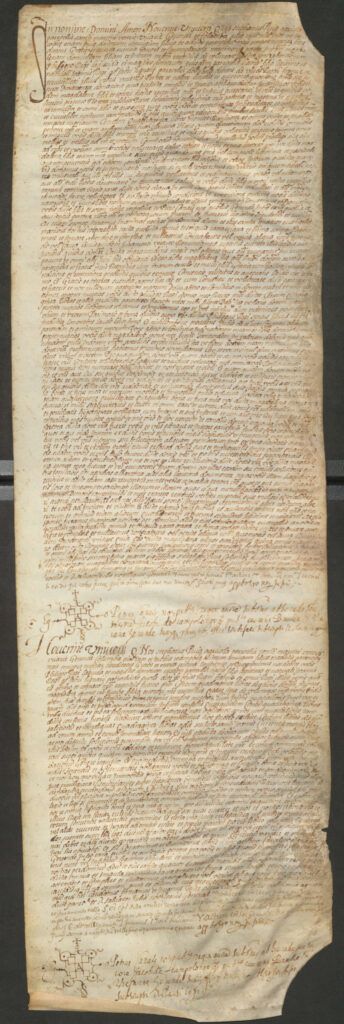
Magdalena’s wedding to Felip Rei, a French immigrant
1604
Document that records a marriage between a young local woman from Sant Martí Vell and a French immigrant, Felip Rei. The record illustrates French immigration to Catalonia at the beginning of the 17th century and their integration into Catalan communities through family ties, a common contemporary phenomenon.
Baix Empordà County Archive
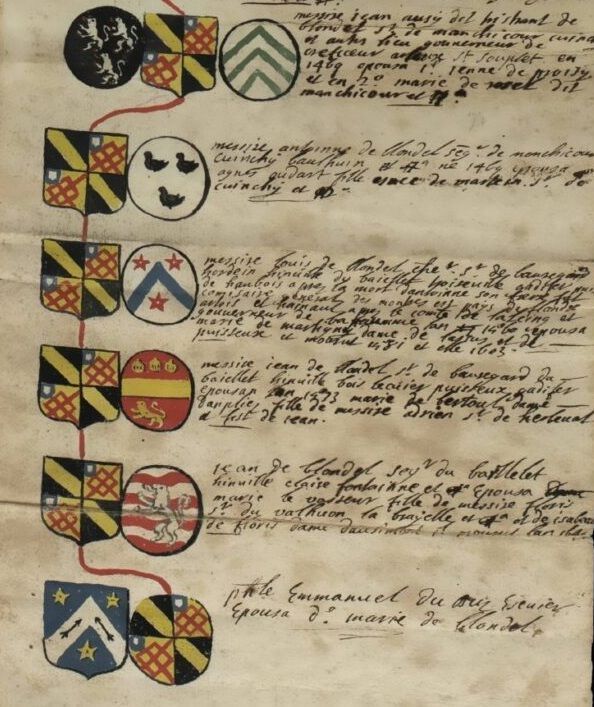
Blondel family tree
1701-1800
Document from the Desvalls family archive with the family tree of the Blondel branch, of French origin, up to its connection with the Dubús, reflecting noble governance and family ties during the Ancien Régime. It also illustrates how the elites managed their memory and social status, a key aspect of the power structure of the time.
National Archive of Catalonia
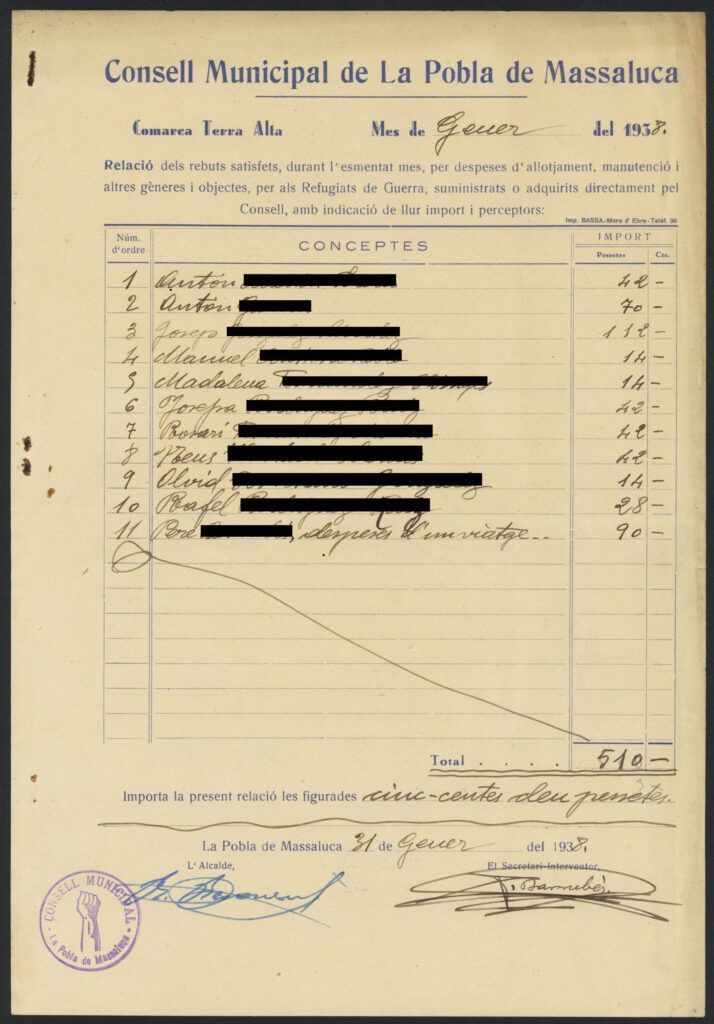
Care for refugees and victims of war
1938
Documentation on the reception of refugees and victims during the Civil War in the rearguard villages of Terra Alta, an example of forced immigration motivated by the conflict. It is a record of the end of the war that exemplifies the human values of reception and solidarity in times of war.
Terra Alta County Archive
Emigrant at the Estació de França in Barcelona
1977
Captured in 1977, the image shows an emigrant at the Estació de França in Barcelona, in search of a better future in Catalonia. The photograph is a testament to railway stations as hubs of mobility, also in migratory processes. Train stations have always been spaces of transit and social interaction throughout the contemporary history of Catalonia.